Latest News

(c) Maximilian Hohmann(c) Maximilian Hohmann
05.02.2026

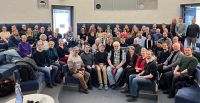
The Annual Conference of the SOCIUM - Research Center on Inequality and Social Policy - was held on 05.02.2026 in the Rotunde of the Cartesium building at the University of Bremen. The collegial exchange focused on mutual reporting on current research findings and strategic initiatives. Participating institutions included, alongside SOCIUM, the Collaborative Research Centre (CRC) 1342 "Global Dynamics of Social Policy" and the German Institute for Interdisciplinary Social Policy Research (DIFIS).


Contact:
Prof. Dr. Simone Scherger
SOCIUM Research Center on Inequality and Social Policy
Mary-Somerville-Straße 5
28359 Bremen
Phone: +49 421 218-58569
E-Mail: simone.scherger@uni-bremen.de

Prof. Heinz Rothgang presents project results in Berlin

Commissioned by the GKV-Spitzenverband (National Association of Statutory Health Insurance Funds), researchers from Bremen developed and tested a new concept for staff deployment in care facilities that can be implemented in the future in over 11,000 residential long-term care facilities in Germany. On January 21, 2026, the results of the pilot program were presented in Berlin.

The tense staffing situation in nursing homes has long been one of the most pressing health policy issues in Germany. However, more staff can only be a solution if nursing homes deploy them in a targeted manner. This is where the concept for staff deployment developed in Bremen comes in, introducing a "competence- and resident-oriented work organization" (KubA) that precisely matches the different qualifications and competencies of nursing staff with the needs and requirements of residents.

Between September 2023 and December 2025, the concept was practically implemented and evaluated in ten pilot nursing homes nationwide. The implementation also included a comprehensive process of personnel and organizational development in the form of training sessions, workshops, and continuing education on topics such as personnel development discussions, the qualification-oriented care process, and duty scheduling. For the evaluation, nursing staff were observed in their activities before and after the implementation of the concept. Additionally, both staff members and residents of the nursing homes were surveyed about their respective satisfaction levels. The results show positive effects in the pilot facilities: care quality has improved, satisfaction with nursing care as well as employee satisfaction has increased, and staff deployment is more efficient.

"The concept for implementing competence- and resident-oriented work organization as well as comprehensive materials to support this process are now available. It is up to the nursing homes now to begin implementation and to design their staff deployment more precisely in the future," says project leader Prof. Heinz Rothgang (Socium, University of Bremen).

Background: PeBeM Study

The presented measures are based on results from a predecessor project that focused on developing a personnel assessment instrument for nursing care. In this so-called PeBeM study, an algorithm was developed which enables a needs-oriented fit between the needs of the residents and the qualification mix of the staff. Because not only the needs and requirements of residents are individual, but the qualifications of staff also differ.

The algorithm developed in the PeBeM study, when applied to all facilities, resulted in an additional staff requirement averaging 36% compared to staffing levels in 2018 – predominantly in the area of nursing assistants with one- to two-year vocational training. These results were reviewed and confirmed for the year 2025 in the current study.

Already based on the PeBeM study, legislators have introduced staff caps that enable care facilities to hire up to 45,000 additional nursing staff nationwide (calculated in full-time equivalents). If this is utilized, it follows that in the future nearly equal numbers of skilled professionals will be supported by significantly more assistant staff. This changed qualification mix requires a new work organization and the above-described process of personnel and organizational development.

The implementation concept for staff planning, which is intended to bring scientific findings into practice nationwide, was developed by researchers from SOCIUM and the Institute for Public Health and Nursing Research at the University of Bremen and the City University of Applied Sciences Bremen. The concept testing in ten pilot facilities was overseen with the consulting firm contec GmbH as a practice partner, and the evaluation was conducted together with aQua – Institute for Applied Quality Improvement and Research in Healthcare GmbH.

Links:

More information about the pilot program: https://www.gkv-spitzenverband.de/pflegeversicherung/forschung/modellprogramm___8_abs__3b_sgb_xi/modellprogramm_8_abs_3b.jsp

Implementation concept and materials: https://www.gkv-spitzenverband.de/pflegeversicherung/forschung/modellprogramm___8_abs__3b_sgb_xi/8_abs_3b_materialien/implementationskonzept_und_materialien.jsp


Foto: Patrick Pollmeier / Universität Bremen


Contact:
Prof. Dr. Heinz Rothgang
SOCIUM Research Center on Inequality and Social Policy
Mary-Somerville-Straße 3
28359 Bremen
Phone: +49 421 218-58557
E-Mail: rothgang@uni-bremen.de

Motherhood Reduces Complex Job Tasks

How the birth of a child affects the content of women’s work is examined by Wiebke Schulz (SOCIUM University of Bremen) and Gundula Zoch (University of Oldenburg) in a new study published in the Journal of Marriage and Family. Motherhood is considered a central source of gender inequalities in the labor market; yet, little is known about how it reshapes women’s specific job tasks.
 
The analysis of panel data from the German National Educational Panel Study (NEPS, 2011–2020) using individual fixed-effects models shows that, after childbirth, mothers perform fewer analytical, complex, and interactive tasks. These reductions are especially pronounced among women who reduce their working hours. No differences were found related to occupational mobility or the length of parental leave.
 
The study highlights a previously underexplored aspect of gender inequality. Motherhood changes the content of work, which is an important factor for job quality, skill development, and long-term career trajectories.
 
The full article is freely accessible here.

Das Forschungsinstitut Gesellschaftlicher Zusammenhalt (FGZ) bietet einen Klimatypenrechner an

Welcher Klimatyp bist du? Was verbindet dich mit anderen? Probiere es hier aus: www.fgz-risc.de/klimatypenrechner 

Der Klimatypenrechner wurde auf Grundlage der Ergebnisse des Zweiten Zusammenhaltsberichts erarbeitet, der am 13.11.2025 auf einer Bundespressekonferenz vorgestellt wurde (wir berichteten). Begleitet wurde die Veröffentlichung mit einer erfolgreichen bundesweiten Plakatkampagne.


Die Forscher am FGZ identifizieren fünf Gruppen: Entschlossene (18%), Besorgte (18%), Zustimmende (31%), Indifferente (25%) und Ablehnende (8%).
Die Ablehnenden kritisieren Klimapolitik und fürchten wirtschaftliche Folgen. Die Entschlossenen sind von der Dringlichkeit umfassender Maßnahmen überzeugt. Dazwischen stehen die Besorgten. Sie teilen das Klimabewusstsein der Entschlossenen – und die wirtschaftlichen Sorgen der Ablehnenden. Das macht sie zu einer Schlüsselgruppe.
Der Zweite Zusammenhaltsbericht des FGZ zeigt, dass der Großteil der Bevölkerung die Gefahren des Klimawandels anerkennt und sich mehr Klimaschutz wünscht. Gleichzeitig machen sich viele Menschen aber Sorgen um die Folgen von Klimapolitik. Nur 8 Prozent lehnen eine ökologische Transformation ab. 
83 Prozent der Befragten sorgen sich um die Folgen des Klimawandels. 71 Prozent sind der Meinung, dass die Politik noch mehr zur Bekämpfung des Klimawandels tun müsste. Aber: 49 Prozent fürchten Jobverluste durch Klimapolitik. 42 Prozent haben Angst um ihren Lebensstandard.
„Es geht bei der Transformation weniger um das ‚Ob‘ als um das ‚Wie‘“, sagt FGZ-Direktor und Mitherausgeber der Studie Prof. Dr. Olaf Groh-Samberg. „Wir finden in unseren Auswertungen eine Gruppe, die sehr deutlich die Risiken und Gefahren des Klimawandels anerkennt, sich aber zugleich stark um die sozialen Folgen von Klimapolitik sorgt.“

Klimapolitik muss soziale Ungleichheiten mitdenken
Die Besorgten könnten die Transformation mittragen – wenn ihre sozialen Sorgen ernst genommen werden. Die Bereitschaft in der Bevölkerung ist da: 53 Prozent sind überzeugt, dass es eine grundlegende Veränderung des Wirtschaftssystems bräuchte, um den Klimawandel zu bekämpfen. Entschlossene und Besorgte eint die Forderung nach Umverteilung und sozialem Ausgleich.

Kleine Gruppe, große Wirkung
Die 8 Prozent Ablehnenden sind politisch aktiv. Ihre Positionen werden in sozialen Medien verbreitet – oft mit Falschinformationen. Das könnte ein Grund dafür sein, warum 70 Prozent befürchten, Klimapolitik verschärfe gesellschaftliche Konflikte. „Wenn die Haltung der Ablehnenden als weit verbreitet gilt, erscheint ambitionierte Klimapolitik als Bedrohung für den Zusammenhalt“, sagt Olaf Groh-Samberg.

Einzigartige Datenbasis
Der Zusammenhaltsbericht nutzt verschiedene Datenquellen zur Analyse des gesellschaftlichen Zusammenhalts. Die repräsentative Studie „German Social Cohesion Panel“ (SCP) stützt sich dabei auf die Befragung von über 8.000 Personen in ganz Deutschland, die Ende 2022 durchgeführt wurde. Die Ergebnisse unserer Studie bilden zentrale gesellschaftliche Konstellationen ab, deren Entwicklung wir fortlaufend beobachten und weiter auswerten. Aktuelle Daten bestätigen, dass Klimaschutz in der Bevölkerung weiterhin einen hohen Stellenwert hat. 
„Mit unseren Daten können wir die Einstellungen zum Klimawandel in der Bevölkerung nicht nur in Bezug auf den sozio-demografischen Hintergrund der Befragten analysieren. Wir können sie auch mit gesellschaftspolitischen Einstellungen, Erfahrungen von Zusammenhalt im Alltag und dem Vertrauen in politische Institutionen in Beziehung setzen“, erklärt Mitherausgeber Dr. Nils Teichler. 

Der vollständige Zusammenhaltsbericht steht hier zum Download bereit.

21.11.2025

DFG Success

(c) Maximilian Hohmann(c) Maximilian Hohmann
"Global Dynamics of Social Policy" CRC Enters Third Funding Phase

The German Research Foundation (DFG) is supporting the Collaborative Research Center 1342 "Global Dynamics of Social Policy" in a third phase for another four years until the end of 2029. In total, over nine million euros have been made available to successfully complete the twelve-year research agenda.

On November 21, 2025, the German Research Foundation's Review Committee for Collaborative Research Centers announced that it would continue to fund CRC 1342 for another four years with over nine million euros. The third funding phase will begin on January 1, 2026.

"We are thrilled about this outstanding success for our university and its partner institutions", commented Prof. Dr. Jutta Günther, President of the University of Bremen. "Over the past eight years, CRC 1342 has established itself as a renowned institution that will now continue to be able to make an important contribution to its interdisciplinary research area for another four years."

Collaborative Research Centers are among the largest and most important research networks supported by the DFG. In addition to SOCIUM as the anchor institute, other research institutes and facilities at the University of Bremen, Constructor University Bremen, Bielefeld University, Marburg University, Bamberg University, Mannheim University, and the University of Duisburg-Essen are involved in CRC 1342, which began its work in 2018. Furthermore, several non-university research institutions such as the Research Centre for East European Studies and the German Centre for Integration and Migration Research (DeZIM) are also included.

In 13 subprojects, around 80 researchers from the fields of political science, sociology, history, geography, law, and computer science are investigating the global effectiveness of state-sponsored social policy. The two funding phases have so far resulted in hundreds of publications in international, peer-reviewed journals, in the form of monographs, anthologies, and policy briefs.

In the third phase, which will begin in January 2026, two project areas will examine how social programs contribute to improving social living conditions and support political integration. In project area A, six subprojects will investigate how social policy affects social and political structures worldwide. In area B, six further subprojects will analyze the social and political consequences of social policy measures in selected countries and regions of the world. The Information Infrastructure Project (INF) will further expand the Global Welfare State Information System (WeSIS). The web-based, interactive system went online in the second funding phase and has been available to researchers and the public free of charge ever since.

Contact:
Prof. Dr. Markus Tepe
University of Bremen
SOCIUM – Research Center on Inequality and Social Policy
Phone: +49 421 218-58520
Email: markus.tepe@uni-bremen.de


Contact:
Dr. Maximilian Hohmann
CRC 1342: Global Dynamics of Social Policy
Mary-Somerville-Straße 3
28359 Bremen
Phone: +49 421 218-57058
E-Mail: hohmann@uni-bremen.de

(Un)mögliche Transformation? Gesellschaftlicher Zusammenhalt und Einstellungen zum Klimawandel in Deutschland

Der zweite Zusammenhaltsbericht des FGZ analysiert umfassend, wie die deutsche Bevölkerung zur sozial-ökologischen Transformation steht. Die Ergebnisse zeigen deutliche Konfliktlinien, aber auch überraschende Konsenspotenziale zwischen verschiedenen gesellschaftlichen Gruppen. Den Bericht als Kurz- und Langfassung sowie weitere Informationen finden Sie auf dieser Seite.

Die Veröffentlichung des zweiten Zusammenhaltsberichts am 13. November 2025 wird gerahmt durch zwei Veranstaltungen am gleichen Tag:

Um 10 Uhr wird die Studie im Rahmen einer Bundespressekonferenz in Berlin vorgestellt. Mit: Dr. Silke Launert (Parlamentarische Staatssekretärin bei der Bundesministerin für Forschung, Technologie und Raumfahrt), Prof. Dr. Olaf Groh-Samberg (Direktor des FGZ und Leiter des German Social Cohesion Panel), Dr. Nils Teichler (Forschungsdatenzentrum des FGZ) und Clara Dilger (FGZ Leipzig). 

Um 18 Uhr werden die Ergebnisse der Studie im Rahmen einer Podiumsdiskussion in Halle mit Vertreter:innen aus Wissenschaft, Medien und Zivilgesellschaft diskutiert. Die Veranstaltung findet statt in Zusammenarbeit mit dem Mitteldeutschen Rundfunk (MDR) und dem Zukunftszentrum Deutsche Einheit und Europäische Transformation. Die Veranstaltung ist öffentlich – nähere Informationen finden Sie hier.

Kontakt
Dr. Nils Teichler
Prof. Dr. Olaf Groh-Samberg
Dr. Jean-Yves Gerlitz