


Latest News


Filter News
Search result:
Prof. Heinz Rothgang presents project results in Berlin

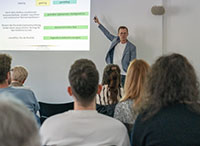
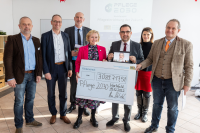
Commissioned by the GKV-Spitzenverband (National Association of Statutory Health Insurance Funds), researchers from Bremen developed and tested a new concept for staff deployment in care facilities that can be implemented in the future in over 11,000 residential long-term care facilities in Germany. On January 21, 2026, the results of the pilot program were presented in Berlin.

The tense staffing situation in nursing homes has long been one of the most pressing health policy issues in Germany. However, more staff can only be a solution if nursing homes deploy them in a targeted manner. This is where the concept for staff deployment developed in Bremen comes in, introducing a "competence- and resident-oriented work organization" (KubA) that precisely matches the different qualifications and competencies of nursing staff with the needs and requirements of residents.

Between September 2023 and December 2025, the concept was practically implemented and evaluated in ten pilot nursing homes nationwide. The implementation also included a comprehensive process of personnel and organizational development in the form of training sessions, workshops, and continuing education on topics such as personnel development discussions, the qualification-oriented care process, and duty scheduling. For the evaluation, nursing staff were observed in their activities before and after the implementation of the concept. Additionally, both staff members and residents of the nursing homes were surveyed about their respective satisfaction levels. The results show positive effects in the pilot facilities: care quality has improved, satisfaction with nursing care as well as employee satisfaction has increased, and staff deployment is more efficient.

"The concept for implementing competence- and resident-oriented work organization as well as comprehensive materials to support this process are now available. It is up to the nursing homes now to begin implementation and to design their staff deployment more precisely in the future," says project leader Prof. Heinz Rothgang (Socium, University of Bremen).

Background: PeBeM Study

The presented measures are based on results from a predecessor project that focused on developing a personnel assessment instrument for nursing care. In this so-called PeBeM study, an algorithm was developed which enables a needs-oriented fit between the needs of the residents and the qualification mix of the staff. Because not only the needs and requirements of residents are individual, but the qualifications of staff also differ.

The algorithm developed in the PeBeM study, when applied to all facilities, resulted in an additional staff requirement averaging 36% compared to staffing levels in 2018 – predominantly in the area of nursing assistants with one- to two-year vocational training. These results were reviewed and confirmed for the year 2025 in the current study.

Already based on the PeBeM study, legislators have introduced staff caps that enable care facilities to hire up to 45,000 additional nursing staff nationwide (calculated in full-time equivalents). If this is utilized, it follows that in the future nearly equal numbers of skilled professionals will be supported by significantly more assistant staff. This changed qualification mix requires a new work organization and the above-described process of personnel and organizational development.

The implementation concept for staff planning, which is intended to bring scientific findings into practice nationwide, was developed by researchers from SOCIUM and the Institute for Public Health and Nursing Research at the University of Bremen and the City University of Applied Sciences Bremen. The concept testing in ten pilot facilities was overseen with the consulting firm contec GmbH as a practice partner, and the evaluation was conducted together with aQua – Institute for Applied Quality Improvement and Research in Healthcare GmbH.

Links:

More information about the pilot program: https://www.gkv-spitzenverband.de/pflegeversicherung/forschung/modellprogramm___8_abs__3b_sgb_xi/modellprogramm_8_abs_3b.jsp

Implementation concept and materials: https://www.gkv-spitzenverband.de/pflegeversicherung/forschung/modellprogramm___8_abs__3b_sgb_xi/8_abs_3b_materialien/implementationskonzept_und_materialien.jsp


Foto: Patrick Pollmeier / Universität Bremen


Contact:
Prof. Dr. Heinz Rothgang
SOCIUM Research Center on Inequality and Social Policy
Mary-Somerville-Straße 3
28359 Bremen
Phone: +49 421 218-58557
E-Mail: rothgang@uni-bremen.de

Studie zeigt positiven Effekt des bundesweiten Screening-Programms

Das vor 20 Jahren eingeführte Mammographie-Screening-Programm für Frauen von 50 bis 69 Jahren trägt deutlich zur Verringerung der Brustkrebssterblichkeit bei. Das ist das Ergebnis einer Studie, die unter Beteiligung des SOCIUM Forschungszentrum Ungleichheit und Sozialpolitik (SOCIUM) durchgeführt und am 9. Juli 2025 bei einer Veranstaltung mit Bundesumweltminister Carsten Schneider und Bundesgesundheitsministerin Nina Warken in Berlin vorgestellt wurde. Unter den Frauen, die an dem Mammographie-Screening-Programm teilnahmen, gingen die Brustkrebstodesfälle demnach zwischen 20 und 30 Prozent zurück. Für die Untersuchung wurden Daten aus den Jahren 2009 bis 2018 ausgewertet.

Teilnahme senkt Sterberisiko

Brustkrebs ist die häufigste Krebserkrankung bei Frauen. Jede achte Frau in Deutschland erkrankt im Laufe ihres Lebens daran. Für 18.500 Frauen pro Jahr endet die Erkrankung tödlich. Ältere und nur eingeschränkt auf Deutschland übertragbare internationale Studien ließen bereits erwarten, dass sich mit einem Mammographie-Screening-Programm für Frauen von 50 bis 69 Jahren etwa 25 Prozent der Brustkrebstodesfälle vermeiden lassen.

Die vom Bundesamt für Strahlenschutz koordinierte und unter Leitung der Universität Münster zusammen mit dem Landeskrebsregister Nordrhein-Westfalen, dem Leibniz-Institut für Präventionsforschung und Epidemiologie – BIPS (BIPS) und dem SOCIUM durchgeführte Studie untersuchte für das deutsche Mammographie-Screening-Programm, wie stark es die Brustkrebssterblichkeit tatsächlich verringert. Die Ergebnisse bestätigen die internationalen Erkenntnisse: Von den Frauen, die am Mammographie-Screening-Programm teilnahmen, starben im Vergleich zu den Nicht-Teilnehmerinnen 20 bis 30 Prozent weniger an Brustkrebs. Es konnte also etwa jeder vierte Todesfall durch eine frühzeitige Diagnose vermieden werden. Mögliche Nachteile des Mammographie-Screenings, wie Überdiagnosen und das sehr geringe zusätzliche Krebsrisiko, das mit der Anwendung von Röntgenstrahlung bei der Untersuchung verbunden ist, waren nicht Gegenstand der Studie, sondern wurden bereits anderweitig bewertet.

Das Mammographie-Screening-Programm

Das Mammographie-Screening-Programm ist das erste systematische Krebsfrüherkennungsprogramm nach europäischen Qualitätsstandards in Deutschland und das größte Screening-Programm in Europa. Für Frauen von 50 bis 69 Jahren wurde es ab 2005 schrittweise eingeführt. Seit 2009 steht es flächendeckend zur Verfügung. Jedes Jahr nutzt etwa die Hälfte der eingeladenen Frauen das Programm. Im Juli 2024 wurde das Screening-Programm auf Frauen bis 75 Jahre ausgeweitet.

Anspruchsberechtigte Frauen erhalten alle zwei Jahre eine schriftliche Einladung zur Mammographie. Die Teilnahme ist freiwillig. Wer sich dafür entscheidet, kann die Untersuchung in einer von 95 zertifizierten Screening-Einheiten durchführen lassen. Geschulte Fachkräfte, moderne Technik und eine Begutachtung der Röntgenbilder durch zwei spezialisierte, unabhängig voneinander urteilende Ärzt*innen sorgen dabei für besonders zuverlässige Ergebnisse.

Das Mammographie-Screening-Programm richtet sich an symptomfreie Frauen. Frauen mit Symptomen oder mit vorangegangener Brustkrebserkrankung erhalten die nötigen Untersuchungen im Rahmen der regulären Krankenversorgung.

Früherkennung mit Röntgenstrahlung nur mit Zulassung

An augenscheinlich gesunden, also symptomfreien Menschen sind Röntgenuntersuchungen zur Früherkennung von Krankheiten nur dann erlaubt, wenn die Untersuchung durch das Bundesumweltministerium zugelassen wurde. Voraussetzung ist, dass der Nutzen das mit der Untersuchung verbundene Strahlenrisiko deutlich übersteigt. Für ein Mammographie-Screening-Programm für Frauen von 50 bis 69 Jahren fiel diese Bewertung Anfang der 2000er Jahre positiv aus. Seit 2018 ist das Bundesamt für Strahlenschutz für die Nutzen-Risiko-Bewertung zuständig.

Über die Studie

Die Wissenschaftler*innen verfolgten zwei parallele Untersuchungsansätze: Im sogenannten kassenbasierten Ansatz wurden Abrechnungsdaten von vier gesetzlichen Krankenkassen durch das BIPS sowie die Daten der BARMER durch das SOCIUM ausgewertet. Dadurch konnten Frauen aus dem gesamten Bundesgebiet in die Studie einbezogen werden. Im sogenannten bevölkerungsbasierten Ansatz analysierte die Universität Münster vollzählige Daten zu allen in Nordrhein-Westfalen lebenden Frauen, die im Untersuchungszeitraum Anspruch zur Teilnahme am Mammographie-Screening-Programm hatten. Dafür wurden Informationen des Landeskrebsregisters Nordrhein-Westfalen sowie des dortigen statistischen Landesamtes (IT.NRW) genutzt. Insgesamt zeigten die Ergebnisse beider Ansätze mit hoher Aussagekraft, dass die Brustkrebssterblichkeit durch das Screening um 20 bis 30 Prozent reduziert wird.

Die aus vier aufeinanderfolgenden Forschungsprojekten bestehende Studie wurde vom Bundesamt für Strahlenschutz fachlich und administrativ koordiniert. Die eigentlichen Forschungsarbeiten führte die Universität Münster zusammen mit dem Landeskrebsregister Nordrhein-Westfalen, BIPS und SOCIUM durch.

Das Bundesumweltministerium, das Bundesgesundheitsministerium sowie die Kooperationsgemeinschaft Mammographie trugen gemeinsam die Kosten von rund 10 Millionen Euro. Über die grundsätzlichen Inhalte des Forschungsprojektes entschied ein Steuerungsgremium, das von einem unabhängigen Wissenschaftlichen Beirat beraten wurde.

Der umfangreiche Ergebnisbericht (500 Seiten) mit detaillierter Darstellung der Methoden und Ergebnisse der Studie „Evaluation der Brustkrebsmortalität im deutschen Mammographie-Screening-Programm“ steht im Digitalen Online Repositorium und Informations-System DORIS unter der URN https://nbn-resolving.org/urn:nbn:de:0221-2025062052653 zur Verfügung.

Link zur Machbarkeitsstudie

https://www.socium.uni-bremen.de/projekte/?proj=447

Link zur Hauptstudie I

https://www.socium.uni-bremen.de/projekte/?proj=588

Link zur Hauptstudie II

https://www.socium.uni-bremen.de/projekte/?proj=665

Link zum Generalunternehmer

https://www.medizin.uni-muenster.de/epi/forschung/projekte/zebra-msp/


Contact:
Prof. Dr. Heinz Rothgang
SOCIUM Research Center on Inequality and Social Policy
Mary-Somerville-Straße 3
28359 Bremen
Phone: +49 421 218-58557
E-Mail: rothgang@uni-bremen.de

Prof. Dr. Jonas Czwikla

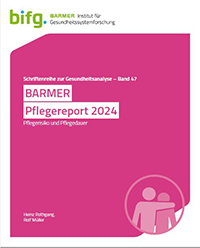
Prof. Dr. Heinz Rothgang presented the BARMER Long-Term Care Report 2024 in Berlin on November 18, 2024

The BARMER Long-Term Care Report, which is published annually, assesses current long-term care policy and evaluates the long-term care situation. It also includes a focus chapter, which in this year’s Report the authors Prof. Heinz Rothgang and Dr. Rolf Müller (both SOCIUM) examine the duration of time that people are dependent on long-term care and how this affects long-term care costs.


Higher costs due to more staff and higher wages in long-term care

Last year, co-payments in nursing homes continued to rise and now amount to a national average of more than 2,300 euros – taking all long-term care insurance benefits into account. This is not least the result of staff increases due to a new standardized procedure developed by the University of Bremen for calculating staffing requirements, as well as the 2022 legislation on complying with collective bargaining agreements for nursing and support staff in long-term care. The latter stipulates that care facilities without a collective agreement introduce one, align wages as closely as possible to an existing one, or ensure a regionally customary wage level for nursing staff. This has led to a significant increase in wages in long-term care: Between December 2021 and December 2023, the wage level for skilled care workers and assistants rose by 17 and 24 percent, respectively, while the increase in nursing, as in the rest of the economy, was only six to twelve percent. The increased costs are thus the result of strategic measures to help improve long-term care in Germany. However, they must be compensated for by the legislature through an effective limitation of co-payments if the legitimacy of long-term care insurance – introduced in 1994 to prevent care-related impoverishment – is not to be damaged.


People are in need of long-term care for longer durations – care costs will continue to rise

This year’s focus chapter primarily looks at the increasing duration of care and the costs involved that can be expected for the long-term care system. A comparison of the data of people in need of care who died in 2022 with projections of the care durations for people who became care dependent in 2022, shows that a significant increase in the duration of care is to be expected. Of the BARMER insurees who died in 2022, 77 percent received long-term care insurance benefits in their lifetime, usually towards the end of their lives. These benefits were received for an average of 3.8 years. For those who became care dependent in 2022, the duration of care can be calculated in advance from cross-sectional data – using the same method used by the Federal Statistical Office to calculate the life expectancy of newborns. According to this, a care duration of 7.5 years is to be expected for people who became care dependent in 2022, i.e., almost twice as high as that of those who died in 2022.

The increased duration of care is also a consequence of the broadened definition of the need for long-term care, as people receive care services earlier and thus longer. Overall, the authors come to the conclusion that the duration of care increases by 100% and expenditure by 50%. Expenditure is rising less sharply, as the additional periods in need of care are mainly spent in lower care grades and with the receipt of attendance allowance, which entails significantly lower expenditure than care benefits in kind provided by outpatient care services or nursing home care.


Long-term financial security is essential for long-term care insurance

In addition to the increasing number of people in need of care due to demographic developments in the coming years and the rising costs due to more staff and higher wages, longer care durations must also be taken into account. These will even further increase the total expenditure of social long-term care insurance per person in new cohorts of care dependents. Long-term care insurance therefore needs significantly greater financial resources in the long run: “The recently initiated contribution increase by Federal Health Minister Karl Lauterbach can at most provide a short-term remedy and, at best, bridge the coming year. For long-term financial security, financing from tax revenues and financial equalization with private long-term care insurance are needed,” remarked Prof. Rothgang.


Contact:
Prof. Dr. Heinz Rothgang
SOCIUM Research Center on Inequality and Social Policy
Mary-Somerville-Straße 3
28359 Bremen
Phone: +49 421 218-58557
E-Mail: rothgang@uni-bremen.de

Dr. rer. pol. Rolf Müller
SOCIUM Research Center on Inequality and Social Policy
Mary-Somerville-Straße 3
28359 Bremen
Phone: +49 421 218-58554
E-Mail: rmint@uni-bremen.de

Five Events Will Take Place in the Fall Term

The Colloquim on Health Policy takes place in German only.


Contact:
Prof. Dr. Heinz Rothgang
SOCIUM Research Center on Inequality and Social Policy
Mary-Somerville-Straße 3
28359 Bremen
Phone: +49 421 218-58557
E-Mail: rothgang@uni-bremen.de

Prof. Dr. Eva Quante-Brandt

Dr. Maren Emde
Unicom Gebäude
Mary-Somerville-Straße 1
28395 Bremen
Phone: +49 421 218 58519
E-Mail: maemde@uni-bremen.de

Health and Long-Term Care Economist Appointed for Another Term of Office

Prof. Heinz Rothgang, Head of the Department of Health, Long-Term Care and Pensions, has been appointed to the Scientific Advisory Board of the "Scientific Institute of the AOK" (Wissenschaftliches Institut der AOK, WIdO) for another term of office.

The WIdO carries out research for the AOK, aiming to improve the quality of the healthcare system and to make it more efficient. The Scientific Advisory Board advises and supports these tasks by contributing their scientific expertise and experience.

Heinz Rothgang has been a member of the Scientific Advisory Board of the WIdO since 2009. Scientific advice such as this is one of the department's important transfer activities.


Contact:
Prof. Dr. Heinz Rothgang
SOCIUM Research Center on Inequality and Social Policy
Mary-Somerville-Straße 3
28359 Bremen
Phone: +49 421 218-58557
E-Mail: rothgang@uni-bremen.de

“Future of Care” Cluster enters the next round

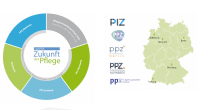
To improve long-term care using digital solutions while at the same time reducing the workload for carers – that is the aim of the research cluster “Future of Care”, funded by the Federal Ministry of Education and Research (BMBF). The main focus of the second funding phase, which has now commenced, is the transfer of new technologies into practice. An important building block for this is the Nursing Care Innovation Center (Pflegeinnovationszentrum, or PIZ) in Oldenburg and Bremen.

Today, long-term care in Germany is confronted with immense challenges, including a rapidly growing number of people in need of care and a glaring shortage of qualified carers. At the same time, care interventions are becoming increasingly complex. In order to tackle these issues, the Ministry of Education and Research is supporting the development and probing of new care technologies.

Since 2017, the “Future of Care” cluster has synergized social and technological innovations; researchers, businesses and stakeholders in the field co-operated with users and worked on developing new products to facilitate and improve routine long-term care work in Germany. As a first measure, the Care Cluster commenced its operations in 2017 at the Nursing Care Innovation Center – a hitherto unique institution in Germany. Here, engineers from OFFIS in Oldenburg explore new technologies in collaboration with nursing-care researchers (headed by Prof. Dr.  Karin Wolf-Ostermann, Institute for Public Health and Nursing Research), and long-term care economists (headed by Prof. Dr. Heinz Rothgang, SOCIUM Research Center on Inequality and Social Policy) at the University of Bremen. Ethical, social and legal aspects are also a key factor in this context, and are investigated at the University of Oldenburg.

After the successful first phase, the research work is now entering phase two, which entails the development of an “innovation and transfer hub”. While in the first phase the focus lay on the development and trial of new technologies, the second phase comprises the transfer and establishment of these technologies into broad practice. They include, for example, robotic systems to reduce fatigue in carers caused by physically demanding work, or technologies to support telecare provision, e.g. assessing a person’s health status using sensor technology.

The University of Bremen contributes with the participation of comprehensive expertise in nursing and care research, long-term care economics and healthcare research, with a particular focus on digital care technologies. “Technological innovations can take the load off routine carework, but they must be implemented sensibly in practical care provision and integrated into the work of carers,” says Professor Dr. Karin Wolf-Ostermann. The Bremen scientists analyse for instance the requirements for technological support in various inpatient and outpatient care situations, explore how technological innovations such as smart watches and other “wearables” can be integrated into everyday care, and address issues relating to the evaluation of technology deployment. “With our experience, our high profile research areas and our networks we can mediate between the requirements and demands in practical care, the interests of developers, and science,” Prof. Dr. Heinz Rothgang explains.

Taken together, the “Future of Care” cluster will be funded to the tune of around 20 million euros in the coming five years. Apart from PIZ, four so-called nursing practice centres (Pflegepraxiszentren, or PPZ) in Berlin, Freiburg, Hanover and Nuremberg will play a major role in the implementation and evaluation of technologies and products.


Contact:
Prof. Dr. Heinz Rothgang
SOCIUM Research Center on Inequality and Social Policy
Mary-Somerville-Straße 3
28359 Bremen
Phone: +49 421 218-58557
E-Mail: rothgang@uni-bremen.de

BARMER Long-Term Care Report 2023 was presented on 05.12.2023 in Berlin

The BARMER Long-Term Care Report, which is published annually, assesses the current long-term care policy, gauges the long-term care situation, and analyses one focus theme. With respect to the latter, in this year’s  Report, the authors Prof. Heinz Rothgang and Dr. Rolf Müller (both SOCIUM) examine the situation of people in need of long-term care in hospitals.

Coalition agreement targets have not been met

The chief objectives laid out in the coalition agreement on the further development of long-term care insurance and the financing of long-term care have not yet been implemented. These concern, among other things, the tax financing of non-insurance benefits such as pension contributions for family caregivers, the exclusion of training costs from co-payments in residential care, and the refinancing of medical treatment care in nursing homes. In view of the current financial situation and its assessment by the Federal Government, it is unlikely that these projects will come to fruition in the current legislative period.

As all long-term care insurance benefits are capped or flat-rat benefits, the adjustments of their respective sum are an important issue. In the Care Support and Relief Act (Pflegeunterstützungs- und -entlastungsgesetz), adjustments have been introduced which come into force in 2024 and 2025, respectively. However, the adjustments made are inadequate: due to inflation in home care, by 2027 the loss in purchasing power amounts to 18 percent for cash benefits and 14 percent for in-kind benefits, while today co-payments in nursing home are higher than ever before and will even increase until 2026. In this respect the legislation has failed to meet its target. 

People in need of care make up a quarter of patients in hospitals

With increasing age, not only the need for long-term care, but also the likelihood of hospitalization increases, and care is needed after hospital discharge. Between 2017 and 2022, the number of people who became care-dependent during the month of hospital admission remained constant between 260,000 and 276,000 per year. On the other hand, the number of hospital cases of people who were already care-dependent before they were admitted to the hospital has risen significantly during this period – from 2.71 million to 3.45 million. Overall, people in need of care make up around a quarter of patients in hospitals.

More than one million potentially avoidable hospital cases per year for people in need of care

More than one million hospitalizations among people in need of long-term care can be considered potentially preventable. These include, in particular, hospital admissions for diabetes mellitus, type 2, volume depletion, heart failure, other chronic obstructive pulmonary disease and other diseases of the urinary system. Besides quality in nursing and medical care, the individual care dependents’ cooperation and health related behaviour also play a role here.

Suddenly in need of care – what follows after hospital discharge?

When the need for care is identified in hospital, it is often associated with relatively sudden, serious illnesses such as a heart attack or stroke, and the care grades are usually higher than in other situations in which the need for care is determined. In such cases, the question of further care arises after hospital discharge, for which the home environment is often not adequately prepared. More than half (53.5 percent) of the people who are diagnosed as care dependent in the course of their hospital stay receive exclusively informal care after discharge – i.e., without mobile nursing services or nursing home care. 39.8 per cent receive long-term and 6.4 per cent move into nursing homes. In addition, one in seven people (14.2 percent) receives short-term care. Half of these people still receive full inpatient care a month later. Short-term care thus often bridges time until adequate care is organized.

Changes also for those already in need of long-term care due to hospitalization

For people who are already care dependent, the probability not only of hospitalization, but also potentially avoidable hospitalization is higher than for people without care needs. In many cases, the care grade increases after the hospital stay. As a result, relatives may also be faced with the challenge of changed care needs. Already in the month of hospital discharge, 5.6 percent of those in need of care who hitherto received informal care make use of a mobile long-term care service, and 2.7 percent move into a nursing home. Of those in need of long-term care who previously received mobile nursing care, 8.1 percent move into a nursing home in the month of discharge. Of the previous users of the in-kind long-term care services, 15.7 percent also use short-term care immediately after discharge, which is also very often used as a bridge to full-time inpatient long-term care.

Hospital stays are significantly longer for those in need of care

The search processes that are necessary to find adequate care can delay hospital discharges, while it is in the interest of hospitals, health insurance companies and those in need of care to keep hospital stays as short as possible. Although hospital discharge management is supposed to help with the transition, it often fails simply because there are not enough places in long-term care facilities and it sometimes starts too late and is poorly coordinated. Patients with a newly identified need for long-term care, for example, spend an average of three and a half days longer in hospital than people not in need of long-term care. This may be due to a more severe disease course, but also due to a necessary bridging period. Since subsequent use of short-term care extends the hospital duration by an average of another six days, it is likely that a longer search process for appropriate care is partly responsible for the longer hospital stays.


Download:

BARMER Long-Term Care Report 2023

Statement by Prof. Rothgang at the Press Conference

Slide Presentation by Prof. Rothgang at the Press Conference


Contact:
Prof. Dr. Heinz Rothgang
SOCIUM Research Center on Inequality and Social Policy
Mary-Somerville-Straße 3
28359 Bremen
Phone: +49 421 218-58557
E-Mail: rothgang@uni-bremen.de

Dr. rer. pol. Rolf Müller
SOCIUM Research Center on Inequality and Social Policy
Mary-Somerville-Straße 3
28359 Bremen
Phone: +49 421 218-58554
E-Mail: rmint@uni-bremen.de

Erster Landespflegebericht in Bremen vorgestellt

Wie steht es um die Pflege im Land Bremen? Können 2030 noch alle Menschen versorgt werden, die auf Unterstützung in ihrem Alltag angewiesen sind? Diese Fragen beantworten Prof. Dr. Heinz Rothgang, Thomas Kalwitzki und Benedikt Preuß (alle SOCIUM, Universität Bremen) im ersten offiziellen „Landespflegebericht Bremen 2023,“ den sie gemeinsam mit Dr. Johanna Krawietz (Landesvereinigung für Gesundheit und Akademie für Sozialmedizin Niedersachsen Bremen e. V) im Auftrag der Senatorin für Arbeit, Soziales, Jugend und Integration vorgestellt haben.

Jeder sechste Mensch in Deutschland wird derzeit im Laufe seines Lebens pflegebedürftig und ist damit in seinem Alltag auf Unterstützung angewiesen. Neben der Pflege durch Angehörige stellen beispielsweise ambulante Pflegedienste und Pflegeheime die Versorgung pflegebedürftiger Menschen sicher. Um diese Versorgung zu garantieren, sieht die Gesetzgebung eine langfristige Planung von ambulanten und (teil)stationären Einrichtungen vor. Der vorgelegte Landespflegebericht bildet die Grundlage für diese Planung, indem er nicht nur die Bevölkerungsentwicklung und die gegenwärtige Pflegeversorgung in Bremen aufzeigt, sondern diese auch den aktuellen und zukünftigen Bedarfen gegenüberstellt. Dazu analysierten die Wissenschaftler Daten aus den Jahren 2015-2022, auf deren Grundlage sie auch Entwicklungen bis 2030 berechnen können.  

Für die allgemeine Bevölkerungsentwicklung stellen die Forscher ähnliche Tendenzen in Bremen und Bremerhaven fest. So wird es zwar in beiden Städten bis 2030 zu einem deutlichen Rückgang in der Altersgruppe der 30-66-Jährigen und einem großen Anstieg der Gruppe der 67-79-Jährigen kommen, der Anteil der über 80-Jährigen sinkt hingegen. Innerhalb der älteren Bevölkerung kommt es insgesamt also zu einer Verjüngung. In Hinblick auf die pflegerische Versorgung ist insbesondere die Altersgruppe 80+ relevant, da hier die Wahrscheinlichkeit pflegebedürftig zu werden am größten ist.

Ältere Stadtteile werden jünger, jüngere Stadtteile werden älter

Ein besonderer Fokus des Berichtes liegt auf dem Vergleich der Bremer und Bremerhavener Stadteile hinsichtlich ihrer Bevölkerungsentwicklung und der Entwicklung der Pflegebedürftigkeit. Hier zeigen sich große Unterschiede. In der Stadt Bremen sind die Stadtteile Oberneuland und Horn-Lehe sowie in Bremerhaven die Stadtteile Surheide und Mitte verhältnismäßig alt, die Bremer Stadtteile Östliche Vorstadt und Walle und die Stadtteile Lehe und Geestemünde in Bremerhaven sind vergleichsweise jung. Diese Unterschiede werden sich aber in den nächsten Jahren angleichen, da die „alten“ Stadtteile jünger, und die „jungen“ Stadtteile älter werden. Doch hier gibt es Ausnahmen: der Bremer Stadtteil Obervieland ist beispielsweise bereits jetzt deutlich älter als der Durchschnitt und wird bis 2030 noch weiter altern.

Die Zahl der Pflegebedürftigen stieg zwischen 2015 und 2021 im Land Bremen, wie im gesamten Bundesgebiet, stark an. Im Verhältnis zur Gesamtbevölkerung liegt die Zahl der Pflegebedürftigen in Bremen damit nah am Bundesdurchschnitt. Aber auch hier sind deutliche Unterschiede zwischen den Bremer Stadteilen zu erkennen: während in Burglesum oder Obervieland in 2021 mehr als 70 Pflegebedürftige je 1.000 Einwohner:innen lebten, waren es in der Östlichen Vorstadt ca. 33. Auf der Grundlage von Daten über Empfänger:innen von Pflegegeld und/oder Pflegesachleistungen durch ambulante Pflegedienste können die Wissenschaftler abschätzen wie sich die Zahl der pflegebedürftigen Menschen zukünftig im Land Bremen entwickelt. Dabei überrascht: zwischen 2021 und 2030 wird die Zahl der Pflegebedürftigen nur minimal um ca. 1.000 Personen steigen. Die unterschiedlichen Bevölkerungsentwicklungen in den Stadtteilen wirken sich auch auf die benötigte Versorgung aus: während in Stadtteilen wie Huchting und Burglesum, die jünger werden, die Anzahl an Menschen, die auf Pflegegeld oder Pflegesachleistungen angewiesen sind, zurück geht, steigt ihre Anzahl in anderen, „alternden“ Stadtteilen wie Walle und der Östlichen Vorstadt um mehr als 20 % an.  

Versorgungslage verschlechtert sich

In ihrem Bericht stellen die Bremer Wissenschaftler auch die Entwicklung der Versorgungssituation in Bremen dar und vergleichen die Versorgung mit anderen Bundesländern. Dabei stellen sie fest: im Land Bremen zwischen 2015 und 2021 sind die Versorgungsgrade (Plätze je Pflegebedürftige) der meisten Leistungsangebote deutlich zurückgegangen. Die Versorgung im ambulanten Bereich (inkl. Tagespflege) ist im Bundesvergleich zwar überdurchschnittlich, im stationären Bereich liegt der Versorgungsgrad hingegen unter dem Bundesdurchschnitt. Besondere Versorgungslücken bestehen im Bereich der Kurzzeitpflege. In Bremen und Bremerhaven unterscheidet sich die Versorgung zwischen den Stadtteilen deutlich. Pflegeheime sowie ambulante Pflegedienste liegen in den beiden Städten meist in zentralen, jüngeren Stadtteilen und damit nicht dort wo der Bedarf besonders hoch ist. Beim großen Thema Personalmangel in Pflegeheimen liegt Bremen hingegen insgesamt im Durchschnitt, wobei es im Vergleich zu anderen Bundesländern einen höheren Bedarf an Pflegefachkräften gibt, dafür aber einen geringeren Bedarf an Assistenzkräften.

Für die Zukunft empfehlen die Wissenschaftler eine zweijährige Berichterstattung, um demographische Veränderungen festzuhalten und eine angemessene Pflegeplanung zu garantieren. Zudem sollten Versorgungslücken in weniger zentralen Stadtteilen gefüllt werden, indem das stationäre beziehungsweise ambulante Angebot ausgeweitet wird. Um dem Personalmangel in der Pflege zu begegnen, heben Prof. Rothgang und seine Kollegen die Notwendigkeit hervor, den Beruf attraktiver zu machen, indem die Arbeitsbedingungen und Bezahlung besser werden. Auch ein neues Konzept zu Maßnahmen der Personal- und Organisationsentwicklung, das aktuell in der Arbeitsgruppe des Bremer Professors entwickelt wird, soll zukünftig dabei helfen, den Einsatz von Pflegepersonal zu verbessern.

Im zweiten Teil des Landespflegeberichts, der durch die Landesvereinigung für Gesundheit und Akademie für Sozialmedizin Niedersachsen Bremen e. V. (LVG & AfS) erarbeitet wurde, wird die Entwicklung und die aktuelle Situation in Hinblick auf pflegeunterstützende Maßnahmen und offene Altenhilfe wie ehrenamtliche Angebote im Bereich Betreuung und Beratung dargestellt.

Der vollständige Bericht kann auf der Website der Pressestelle des Senats heruntergeladen werden.

Text: Maren Emde und Benedikt Preuß


Contact:
Prof. Dr. Heinz Rothgang
SOCIUM Research Center on Inequality and Social Policy
Mary-Somerville-Straße 3
28359 Bremen
Phone: +49 421 218-58557
E-Mail: rothgang@uni-bremen.de

photo: Senatspressestellephoto: Senatspressestelle
Senator for Social Affairs, Youth, Integration and Sport welcomed the project partners

The TCALL project* was officially launched at the Bremen Town Hall on 3rd April, 2023, where the Senator for Social Affairs, Youth, Integration and Sport welcomed the project partners, among them academics, practitioners and other actors from the care and policy sectors. By setting up teaching units in three model care homes in Bremen, the project has initiated the creation of new innovation and transfer structures in long-term care. The prospective aim of the project is to disseminate these structures, so that new technical and digital as well as structural and process management developments can be tested, evaluated and implemented – in Bremen and throughout Germany.

The 9-year project, funded to the tune of €16m. by the German Federal Ministry for Education and Research (BMBF) and coordinated by Prof. Heinz Rothgang (Department of Health, Long-Term Care and Pensions at SOCIUM, University of Bremen), unites the expertise of the following actors in the long-term care sector in Bremen:

Scientific partners:

  • Prof. Heinz Rothgang, SOCIUM, University of Bremen
  • Prof. Karin Wolf-Ostermann and Prof. Ingrid Darmann-Finck from the Institute of Public Health and Nursing Research (IPP), University of Bremen
  • Prof. Karsten Wolf from the Centre for Media, Communication and Information Research (ZeMKI), University of Bremen
  • Prof. Claudia Stolle, Nursing Research and Advisory Centre at the Bremen University of Applied Sciences
  • Prof. Matthias Zündel from the Integrated Health Campus Bremen (IGB)
  • Bremen Centre for Nursing and Care Education

Practice Partners:

  • Johanniterhaus Bremen (St. John’s Association care home)
  • Two care homes of the Caritas Association Bremen


The kick-off was attended by representatives from all the partners involved, and especially the staff from the participating care homes, as well as other stakeholders from the care and policy sectors. Statements were given by Anja Stahmann (Senator for Social Affairs, Youth, Integration and Sport), Tim Cordßen-Ryglewski (State Counsellor to the Senator for Science and Ports), Prof. Maren Petersen (Vice President for Teaching and Studies), Dr. Sabina Schoefer (Vice President for Digitalisation at the Bremen University of Applied Sciences) and Prof. Heinz Rothgang (Professor at the University of Bremen and Project Coordinator). The event was rounded off with interactive elements and an informal get-together.

* (Transfer Cluster of Academic Long-Term Care Teaching Facilities, in German: Transfercluster Akademischer Lehrpflegeeinrichtungen in der Langezeitpflege

You will find further contributions to this event here:

https://gesundheitscampusbremen.de/presse/auftaktveranstaltung-projekt-tcall/
https://www.butenunbinnen.de/nachrichten/forschung-bremen-pflege-100.html
https://www.sat1regional.de/pflege-der-zukunft-erste-akademische-lehrpflegeeinrichtung-in-bremen-eroeffnet/
https://www.weser-kurier.de/deutschland-welt/bremen-forschungsprojekt-soll-altenpflege-verbessern-doc7pm6vvta65s6s9tf34n


Contact:
Prof. Dr. Heinz Rothgang
SOCIUM Research Center on Inequality and Social Policy
Mary-Somerville-Straße 3
28359 Bremen
Phone: +49 421 218-58557
E-Mail: rothgang@uni-bremen.de

Prof. Rothgang and Team at SOCIUM are Partners in Flagship Project “Long-Term Care 2030”

The kick-off event at Karlsfeld on 19th December 2022 marked the beginning of a pilot project on long-term care for tomorrow, a joint initiative of SOCIUM and the Fraunhofer Institute for Integrated Circuits (Fraunhofer IIS) together with the Korian Foundation for Long-Term Care and Aging with Dignity (Korian Stiftung für Pflege und würdevolles Altern) as well as Korian Deutschland GmbH.

The pilot project has been awarded a budget of approx. 7m euros, of which half is provided by the Bavarian State Ministry for Health and Long-Term Care. Korian Deutschland is funding not only the cost of building and reconstruction work to the tune of 2.5m euros, but is also giving a further 1m euros over a period of 3 years to increase staffing levels. With this funding it will be possible to implement and test a scientific method for the standardized calculation of staffing requirements in long-term care, developed in a major project conducted by the University of Bremen from 2017-2020, commissioned by the self-governing body of long-term care insurance providers.

The present project was inaugurated by Klaus Holetschek, Bavarian State Minister for Health and Long-Term Care. In his speech, he declared: “Improving long-term care is a key issue for the future. We need to ensure that people in need of care are treated with dignity, but also that working conditions for care workers are improved. We must set the course now to provide comprehensive, humanitarian long-term care for tomorrow. The Bavarian State Ministry for Health and Long-Term Care considers the Project ‘Long-Term Care 2030’ forward-looking, and it is hoped that it will bring us sustainable insights for the long-term improvement of residential care in and beyond Bavaria.”

Elisabeth Scharfenberg, Chair of the Korian Foundation, added: “We, the Korian Foundation, are delighted over the inauguration of the project ‘Long-Term Care 2030’ at the Korian nursing home in Karlsfeld. With scientific support, we shall over the next three years be implementing a modernized concept that will effectively facilitate the daily work of care workers, support them in their routines and hence also benefit those in need of care.”

For the 3-year duration of the project, quantitatively and qualitatively needs-based and digitalized long-term care will be implemented and tested in realtime at the nursing home in Karlsfeld. With a significantly higher proportion of care assistants in the staff mix, the modernization of the nursing home using digital care technology (such as sensors, AI, service robots or data-based process management) and an innovative staffing schedule will be tested and evaluated. “In this way, needs-based and skills-oriented, digitally supported processes can be developed in the daily routine to enhance both the life quality of the nursing home residents and work satisfaction among qualified carers”, emphasized Professor Heinz Rothgang, University of Bremen.

 “The development, implementation and integration of new processes and ‘smart’ technologies to ease the workload for care workers present considerable challenges both for the developers and the users”, stated Dr. Thomas Wittenberg from the Fraunhofer Institute. In order to identify and evaluate the appropriate technologies (such as intelligent beds, data glasses, voice recognition or robotic systems for reducing workloads in long-term care), researchers of the Fraunhofer Institute in Erlangen will contribute to the project with their expertise. In close cooperation with the careworkers, they aim to develop new procedures for recognizing, analysing and interpreting stress points in care processes by means of wearable sensors, and put solution approaches into practice.

 In view of the urgent need for reform in residential long-term care, the nursing home at Karlsfeld should serve as a best-practice model for skill-based care in a digitalized home, and deliver valuable, transferable findings not just for Bavaria, but also for the whole of Germany. “The interplay and the triad of additional staff, building infrastructure and the application of technology make ‘Long-Term Care 2030’ a holistic, future-oriented project. If we want to make long-term care sustainable and viable for the future, we must not think in inflexible categories,” said Dr. Marc-Alexander Burmeister, CEO of Korian Deutschland GmbH. The objective is rather to evaluate the whole project holistically in terms of quality of care, and to tailor modular guidelines that other nursing homes can use as implementation blueprints.


Contact:
Prof. Dr. Heinz Rothgang
SOCIUM Research Center on Inequality and Social Policy
Mary-Somerville-Straße 3
28359 Bremen
Phone: +49 421 218-58557
E-Mail: rothgang@uni-bremen.de